Halima's story: from no device to three clients
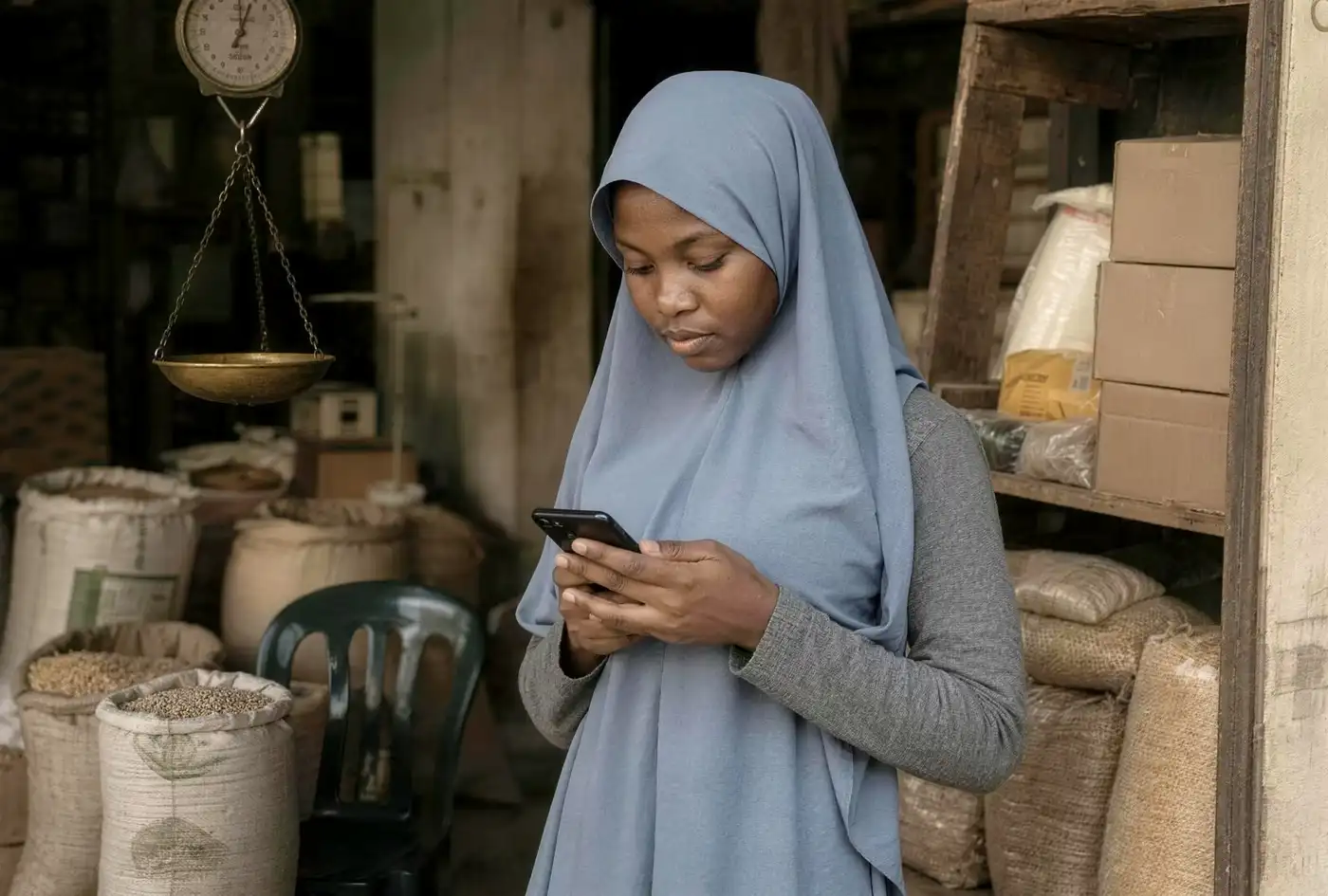
A Community Connect Hubs story from Lugbe, Abuja. Halima finished secondary school with no device of her own and no work. Twelve weeks after the hub opened she was keeping the books for three traders.
Halima finished secondary school in 2023 with no device of her own and no work. The nearest place to use a computer charged by the hour, and the hour was never long enough to learn anything in.
This is what happened next, in her words and ours.
Before the hub
Her position was ordinary, which is the point. She had passed her exams. She had a phone, shared with her younger brother. She had an aunt with a provisions stall in the market and time on her hands.
What she did not have was any route from where she was to anywhere else. The business centre down the road charged two hundred naira an hour and the clock started the moment you sat down, which meant nobody learned anything there. They paid someone else to type for them and left.
“You cannot practise when you are paying by the minute,” she said. “You just watch the man type and then you go home.”
The first week
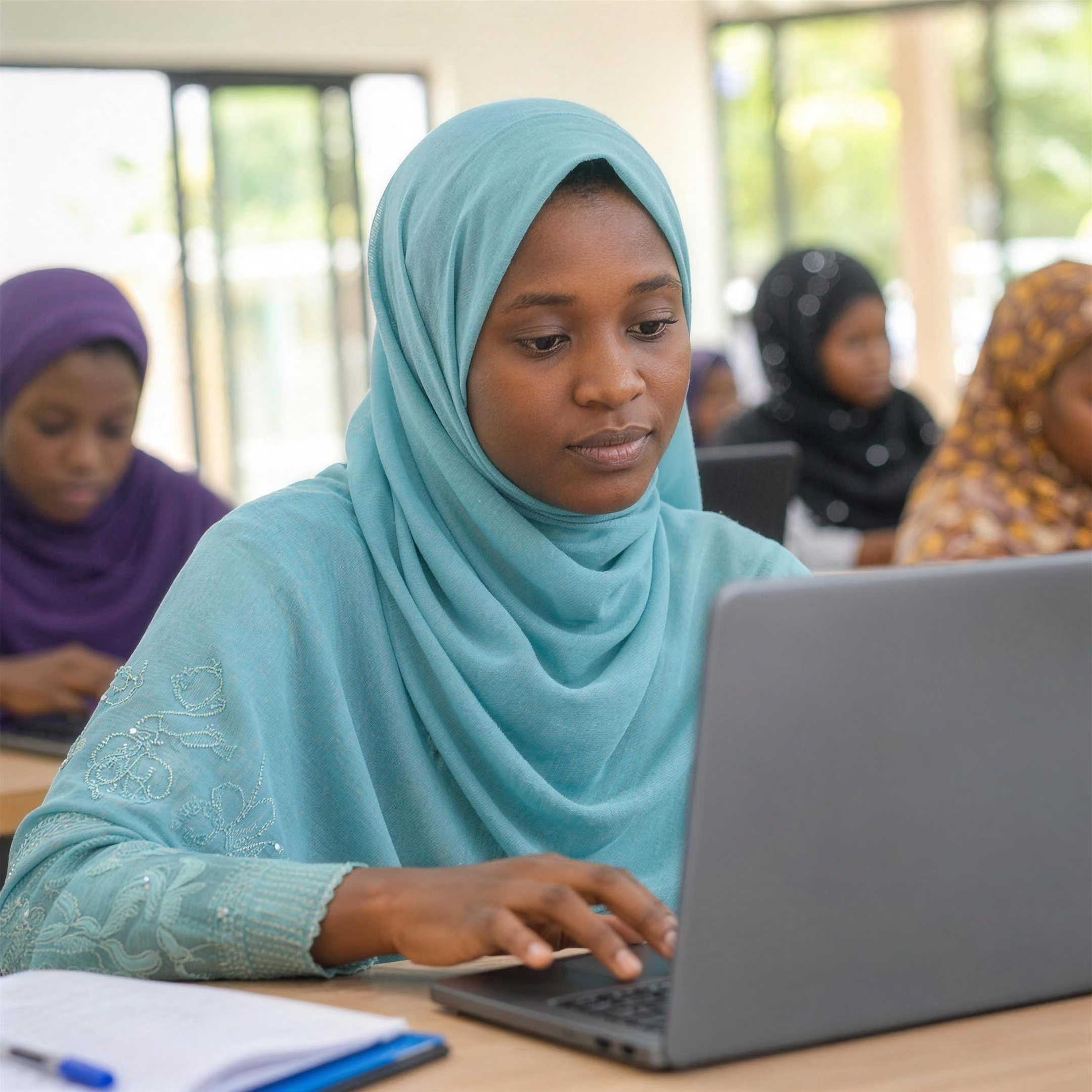
When the Community Connect Hub opened in Lugbe market she came on the first day, mostly out of curiosity and partly because it was free. She sat at the back. She did not ask a question for three sessions.
The facilitator, recruited from the market herself, started Halima on a spreadsheet with three columns: what came in, what went out, what was left. Not an accounting course. Three columns.
“I thought a computer was for people who had been taught computers,” Halima said. “Nobody told me it was just a thing you learn.”
What changed, and how fast
Within a month she was keeping that spreadsheet for her aunt’s provisions stall. This was not a plan. Her aunt asked, because she had seen her doing it and because reconciling a stall’s takings from memory is miserable work.
Within three months, two neighbouring traders had asked for the same. They pay her a small monthly amount each. She now keeps the books for all three on her phone, using the same three columns, and she has a place on a part-time accounting diploma.
The skill that earned her the work was not advanced. It was a spreadsheet, kept consistently, by someone the traders already trusted. What the hub provided was not knowledge so much as the unmetered hours in which to acquire it.
In her words
“Before the hub I had never sent an email. Now I keep the accounts for three shops on my phone.”
What this story does and does not show
It shows what access plus time plus a trusted teacher can do for someone who was already capable and simply had no opening. It does not show that this happens for everyone, and we are not going to imply that it does.
For every Halima there are people in the same cohort who came twice and stopped, or who finished the sessions and found nothing changed because there was no aunt with a stall and no neighbouring traders. A single good story is the easiest thing in the world for an organisation to find and the least informative thing it can publish.
That is why our targets are published as numbers with a method attached, and why our first annual report will give progression rates for whole cohorts rather than a gallery of best cases.
What we changed because of her
Two things. The three-column spreadsheet is now in the first four sessions of the hub curriculum, because it turned out to be the fastest route from sitting at the back to earning something.
And we now ask participants at week eight whether anyone has asked them to do paid work, because that question predicted outcomes better than any confidence score we were collecting.